Sensory-Friendly Dental Visits for Kids | Wells Dental Tucson
Dental Visits for Children With Sensory Sensitivities in Tucson
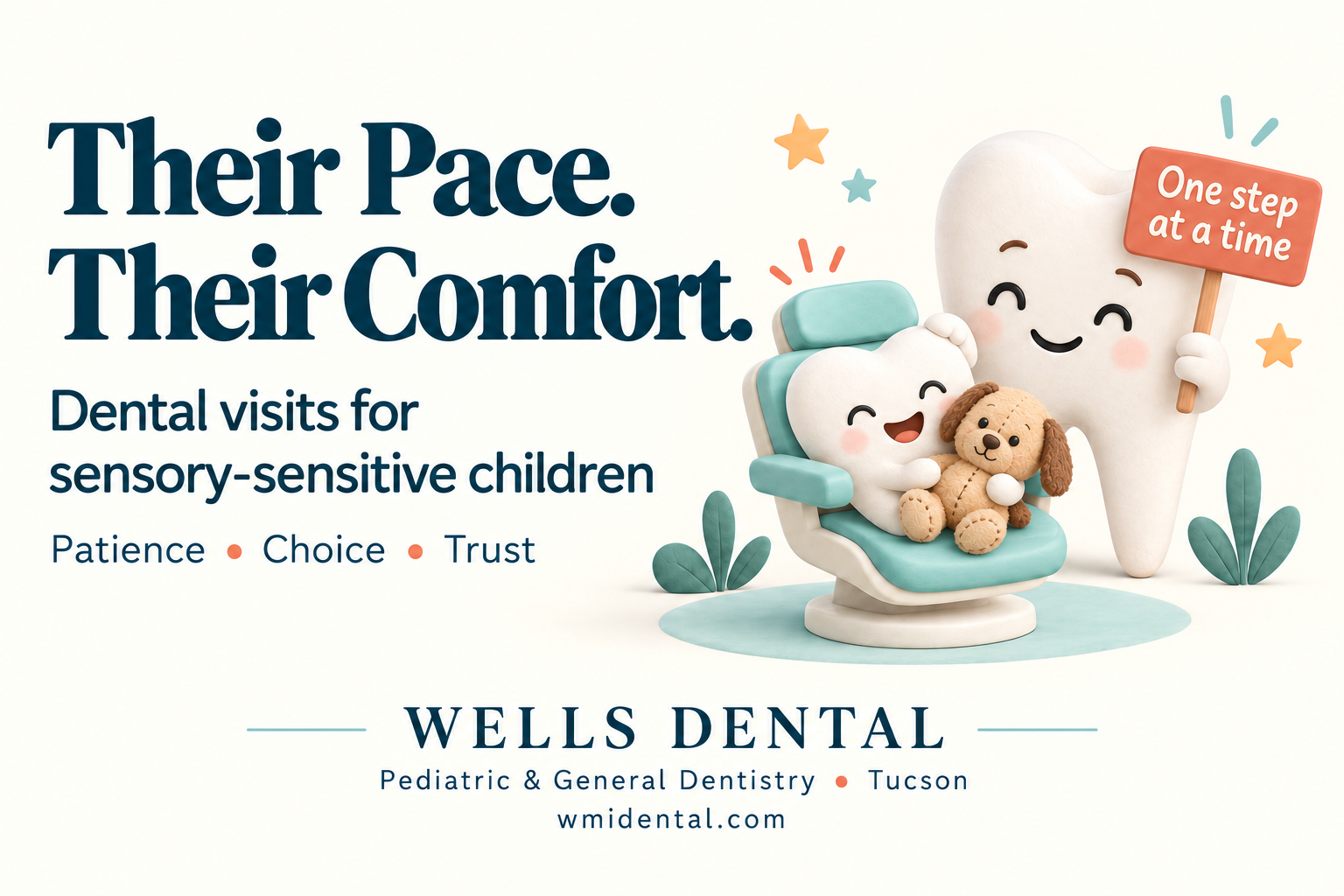
The sound of a dental instrument, a bright light, or an unfamiliar sensation can make a dental visit overwhelming for some children. When a child has sensory sensitivities, helping them feel comfortable starts with understanding how they experience the environment.
At Wells Dental in Tucson, we approach care with patience, flexibility, and respect. Our goal is to address your child’s dental needs while building trust and helping them become more comfortable participating in their care.
Dental Care at a Pace That Works for Your Child
Every child responds differently to a dental setting. Some want to know exactly what will happen. Others prefer fewer explanations, a familiar distraction, or time to watch before participating.
We consider your child’s communication style, sensory preferences, past experiences, and treatment needs when planning their visit. Whenever clinically appropriate, we introduce care gradually, allow breaks, and adjust the pace.
Sensory distress is communication—not misbehavior. If a child is overwhelmed, understanding the reason helps us decide what to change.
Before the appointment, tell us about sounds, textures, tastes, touch, or positioning that your child finds difficult. Let us know what usually helps them feel calm, too.
Making the Unknown More Familiar With Tell–Show–Do
One way to make dental care more predictable is tell–show–do:
- Tell: Explain the next step using language the child understands.
- Show: Demonstrate the tool or sensation in a nonthreatening way.
- Do: Proceed with the explained step when appropriate, watching the child’s response.
For example, we might show a child the dental mirror before using it to count their teeth. Some children benefit from a demonstration on a model or from seeing how an instrument works before it approaches their mouth.
Tell–show–do, distraction, and gradual familiarization are recognized approaches in pediatric dental behavior guidance. The choice depends on the individual child.
What Are Desensitization Appointments?
A desensitization appointment, sometimes called a familiarization visit, introduces parts of the dental experience in manageable steps.
Depending on your child’s needs, a visit might focus on meeting the team, exploring the chair, opening their mouth briefly, or becoming comfortable with a toothbrush or mirror. These visits are not about forcing a child to tolerate distress. They are opportunities to practice and build familiarity.
Progress may look different from one child to another. Sitting comfortably in the chair or communicating a need for a break can be a meaningful achievement.
When there is pain, infection, or another urgent concern, however, we may need a more immediate treatment plan. Familiarization should not delay necessary care.
Comfort Options at Wells Dental
Comfort tools work best when they match the child’s preferences. Something soothing to one patient may be distracting or unpleasant to another.
A Weighted Stuffed Puppy
We have a weighted stuffed puppy that some patients enjoy holding during their appointment. For a child who likes that sensation, it may offer a comforting focus.
Its use is optional and based on your child’s preference and safety. It is a comfort item, never a restraint, and can be removed whenever your child wants.
AR Glasses for Watching a Movie
Some patients enjoy using our AR glasses to watch a movie during care. A familiar or engaging video may help shift attention away from the dental surroundings.
Other children prefer to see the room and maintain direct eye contact with the team. We respect both preferences and consider whether the glasses are suitable for the child and procedure.
Breaks and Clear Communication
A planned pause or an agreed signal can help a child communicate that they need a break. We can work with families to identify a signal that fits the child’s abilities, including gestures or other communication methods.
The purpose is to help your child feel heard and involved.
Can Laughing Gas Help With Dental Anxiety?
Nitrous oxide with oxygen, commonly called laughing gas, can help reduce anxiety for some children during dental treatment. It is delivered through a small mask over the nose.
When used for minimal sedation, children generally remain awake and able to respond. It does not replace local anesthetic when numbing is needed.
Laughing gas is not the right option for everyone. A child needs to tolerate the nasal mask and breathe adequately through their nose. Medical history, current congestion, sensory preferences, and treatment needs all affect whether it is appropriate. We discuss those considerations before recommending it.
Helping Children Take an Active Role in Their Oral Health
Whenever possible, we invite children to participate in ways that match their development and abilities.
That might include choosing a comfort item, practicing opening their mouth, holding a mirror, or asking questions through their preferred communication method.
We can also demonstrate brushing and flossing and let children practice with guidance. The goal is to build useful skills and confidence, while recognizing that some children will continue to need substantial caregiver help.
Participation does not have to look the same for every patient. Small choices and achievable tasks can help make care feel more predictable and collaborative.
When Sedation or General Anesthesia May Be Appropriate
We value opportunities to help children become comfortable receiving care while awake. When appropriate, we begin with communication, gradual introductions, comfort tools, and other supportive approaches.
However, a child does not need to try every technique or endure repeated distress before sedation is considered. More extensive treatment, urgent dental needs, medical conditions, or an inability to receive care safely may make sedation or general anesthesia an appropriate choice.
The decision should consider the child’s health, treatment needs, likely benefits, risks, and available alternatives. Needing sedation is not a failure by the child or their family.
Comfort-building can continue during future preventive visits, even if a child needs a different approach for a particular treatment.
Finding the Right Setting—Even When It Is Not Our Office
The best dental setting is the one that can safely meet your child’s needs.
Sometimes that means adapting care in our office. Other times, a referral to a provider or facility with additional resources is the better option. We do not provide general anesthesia at Wells Dental. When that level of care is appropriate, we can help guide families toward a suitable provider.
Our priority is helping your child receive appropriate care, including when treatment needs to happen elsewhere.
How to Prepare for a Sensory-Friendly Dental Visit
When scheduling, share information that can help us plan:
- Your child’s preferred way to communicate.
- Sensory triggers and helpful comfort strategies.
- Previous dental experiences.
- Medical conditions, medications, and allergies.
- Whether there is pain, swelling, or difficulty eating.
- Any support needs that may affect the appointment.
A favorite comfort item or a simple explanation of what to expect may also help. There is no need to apologize for your child’s needs—understanding them is part of planning their care.
A Dental Home Built on Familiarity and Trust
An ongoing relationship with a dental team gives your child opportunities to become familiar with the people, surroundings, and routines of care. It also helps the team learn which approaches work best over time.
At Wells Dental, we aim to make dental care more understandable, comfortable, and accessible for children with sensory sensitivities.
Learn about pediatric dental care at Wells Dental or contact our office at 6246 E Pima St, Tucson, AZ 85712, to discuss your child’s needs before scheduling.