Why Baby Teeth Matter | Wells Dental Tucson
Why Are Baby Teeth Important If They Fall Out Anyway?
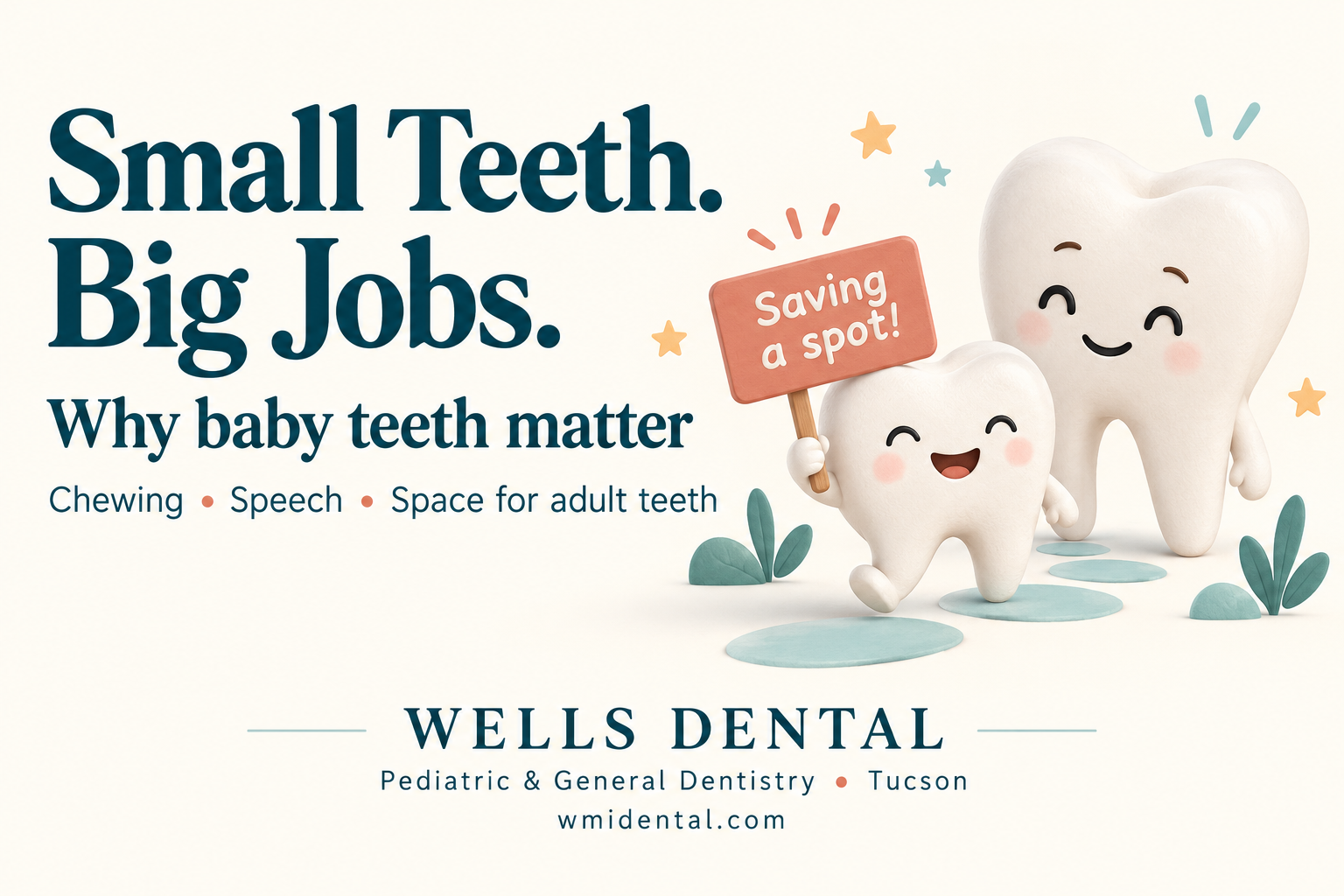
“They’re just baby teeth—won’t they fall out?”
It’s an understandable question. Baby teeth are temporary, but they have important jobs during some of your child’s biggest years of growth. They help children chew, speak, and hold space for their future adult teeth. Keeping them healthy also helps prevent pain and infections.
At Wells Dental in Tucson, we want parents to understand why caring for these little teeth can make a lasting difference.
What Are Baby Teeth Called?
The dental terms for baby teeth are primary teeth or deciduous teeth. “Deciduous” means something that is shed—similar to how deciduous trees shed their leaves.
Children typically have 20 baby teeth: 10 on top and 10 on the bottom. These include incisors for biting, canines for tearing, and molars for grinding food.
Although they are smaller than permanent teeth, baby teeth are real, living teeth with roots, nerves, and blood vessels. They can develop cavities, sensitivity, and infections.
When Do Baby Teeth Develop?
Baby teeth begin developing during pregnancy, long before the first tooth appears in your baby’s smile. Their enamel forms while the teeth are still beneath the gums.
The first tooth often appears around 6 months of age, usually in the lower front. Most children have all 20 primary teeth by approximately age 3, although timing varies between children.
Meanwhile, permanent teeth are developing within the jaws. For years, the teeth you can see and the future teeth you cannot see are growing alongside one another.
Why Do Baby Teeth Fall Out?
As a permanent replacement tooth develops and moves toward its position, the baby tooth’s roots gradually break down through a normal process called root resorption.
With less root holding it in place, the baby tooth becomes loose and eventually falls out. This is why a naturally shed baby tooth often looks like a little shell without long roots.
Children usually begin losing baby teeth around age 6, and many keep some primary teeth until approximately ages 12–13. That means a baby molar with a cavity in a preschooler may still be needed for several years.
How Do Baby Teeth Help Adult Teeth Come In?
Baby teeth act as natural space holders. They help preserve room in the jaws and guide permanent replacement teeth toward their expected positions.
If a baby tooth is lost too early because of decay, infection, or injury, neighboring teeth may drift into the space. This can leave less room for the permanent tooth and contribute to crowding or eruption problems.
Depending on which tooth is lost, your child’s age, and the development of the permanent tooth, a dentist may recommend a space maintainer. Not every early tooth loss requires one.
Healthy baby teeth support normal dental development, but they cannot guarantee perfectly straight adult teeth. Jaw size, genetics, and other factors also influence alignment.
Can an Infected Baby Tooth Damage an Adult Tooth?
Yes—an infection in a baby tooth can sometimes affect the developing permanent tooth nearby.
When decay reaches the pulp—the tissue containing nerves and blood vessels inside the tooth—an infection may develop around its roots. Because the permanent replacement tooth is developing close by, that infection can disturb its enamel formation.
Possible effects include areas of thinner or defective enamel and discoloration. The outcome depends partly on the infection’s location, severity, and timing during tooth development. Damage is possible, but it does not happen with every cavity or infection.
A small cavity does not automatically mean the adult tooth is damaged. It does mean there is an opportunity to assess and manage the problem before it becomes more serious.
Contact a dentist promptly for tooth pain, swelling, or a pimple-like bump on the gums. Facial swelling or fever needs urgent evaluation; difficulty breathing or swallowing requires emergency care.
Are Baby Teeth Weaker Than Adult Teeth?
A more helpful way to describe baby teeth is that they have thinner protective layers.
Their enamel—the hard outer covering—is thinner than that of permanent teeth. The dentin beneath it is also thinner, and the pulp occupies a relatively larger portion of the tooth. This leaves less distance for decay to travel before it reaches sensitive inner tissues.
Baby teeth are strong enough for their normal jobs, but cavities can progress through them relatively quickly. A tooth does not need to look badly broken to have a significant problem.
Baby Teeth Help With More Than Future Alignment
Healthy primary teeth also help children:
- Eat comfortably: Biting and chewing support a varied diet.
- Develop speech: Teeth help children form certain sounds.
- Feel comfortable smiling: Healthy teeth support everyday social confidence.
- Avoid preventable discomfort: Untreated decay can interfere with eating, sleeping, and daily activities.
A Surprising Fact: Some Adult Teeth Arrive Without a Baby Tooth Falling Out
The first permanent molars often appear around ages 6–7, behind the last baby molars. They do not replace a baby tooth.
Because no tooth falls out first, parents sometimes mistake these new back teeth for another set of baby teeth. They are permanent and need careful brushing from the start. Your dentist may recommend sealants to help protect their chewing surfaces.
How Can Parents Protect Baby Teeth?
Good habits can begin with the very first tooth:
- Brush twice daily with fluoride toothpaste. Use a rice-grain-sized smear for children younger than 3 and a pea-sized amount for children ages 3–6.
- Help with brushing. Young children need an adult’s help to clean their teeth thoroughly.
- Floss where teeth touch. A toothbrush cannot clean these tight spaces well.
- Limit frequent sugary snacks and drinks. Repeated exposure throughout the day increases opportunities for decay.
- Avoid putting your child to bed with a bottle containing milk, formula, juice, or sweetened drinks.
- Schedule the first dental visit within six months of the first tooth appearing, and no later than the first birthday.
Does Every Cavity in a Baby Tooth Need a Filling?
Not necessarily—but every suspected cavity deserves an evaluation.
The best approach depends on how advanced the decay is, whether there is pain or infection, and how long the tooth is expected to remain. Options may include preventive care and monitoring, treatments that arrest decay, a filling, a crown, or other care.
Waiting for a painful or infected tooth to fall out is not a safe substitute for an assessment.
Caring for Growing Smiles in Tucson
Baby teeth may be temporary, but the comfort and development they support matter right now.
At Wells Dental, we provide pediatric and general dentistry for Tucson families. Whether your child’s first tooth has appeared, a baby tooth has a cavity, or you have questions about adult teeth coming in, we can help you understand the next step.
Learn about pediatric dental care at Wells Dental or contact our office at 6246 E Pima St, Tucson, AZ 85712, to request an appointment.