Child’s First Dental Visit in Tucson | Wells Dental
What to Expect at Your Child’s First Dental Visit in Tucson
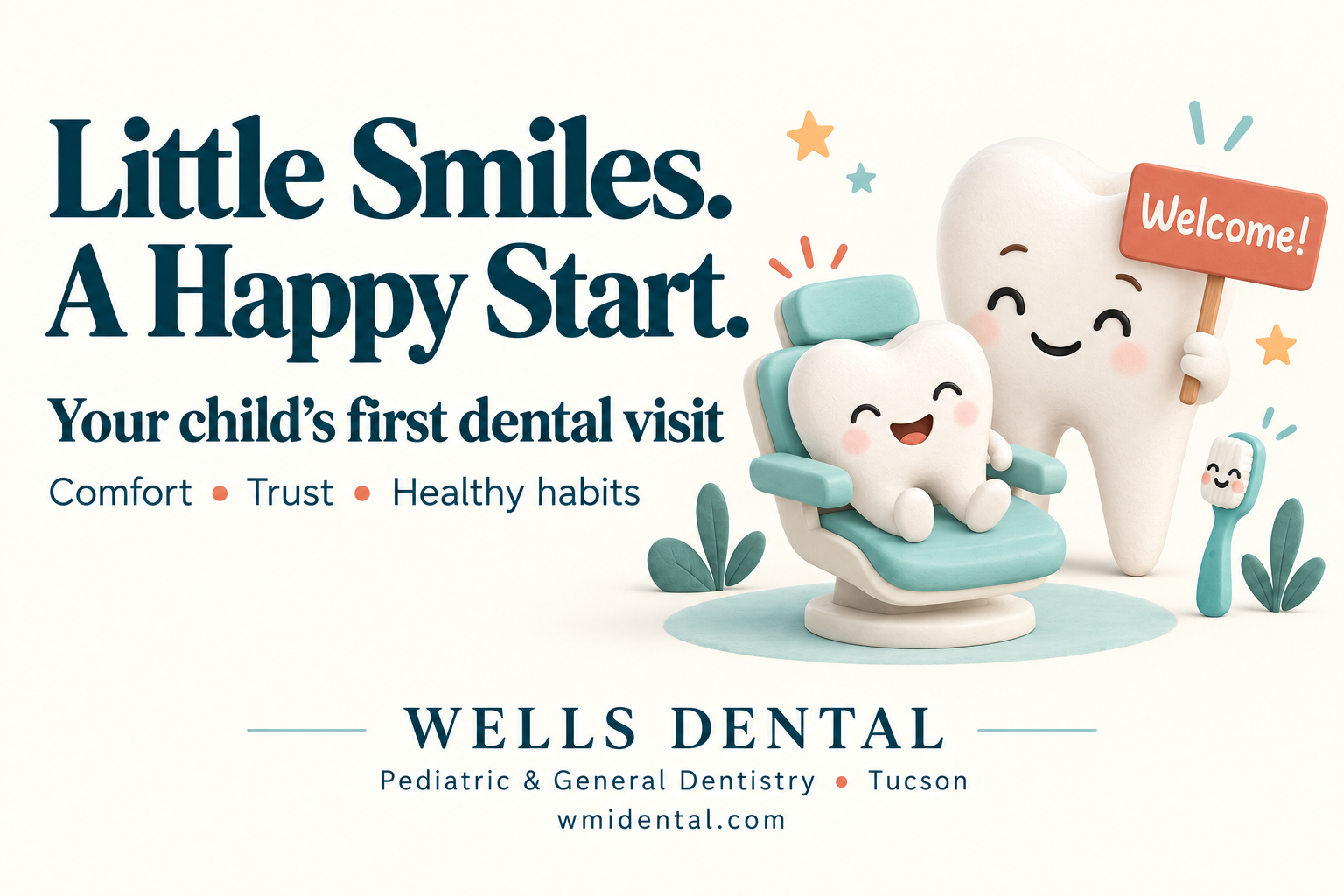
Your child’s first dental visit is about more than checking teeth. It is an opportunity to build trust, introduce healthy habits, and help the dental office become a familiar, welcoming place.
At Wells Dental in Tucson, our goal is to make dentistry approachable—and even fun. We take an individualized approach that considers your child’s age, development, comfort level, and dental needs.
Whether your child is a baby with a first tooth or an older child visiting a dentist for the first time, we want your family to feel informed, respected, and supported.
Why Finding a Dental Home Matters
A dental home is an ongoing relationship with a dental team that knows your child and helps coordinate their oral health care. It gives your family a familiar place for preventive visits, questions, treatment, and unexpected dental problems.
The American Academy of Pediatric Dentistry recommends establishing a dental home by 12 months of age. Your child’s first visit should occur within six months of the first tooth appearing, and no later than their first birthday. If your child is older, it is still a good time to begin.
Regular visits give children opportunities to become familiar with the office before they need urgent treatment. They also allow the dental team to follow changes in their teeth and tailor care as they grow.
Getting Comfortable Comes First
A dental office introduces unfamiliar sounds, lights, equipment, and sensations. Some children are curious right away; others need time to observe and ask questions.
We aim to introduce each step in language your child can understand. That might mean showing them the little mirror, explaining how the chair moves, or letting them learn about a tool before it is used.
Building trust is part of dental care. We work at a pace that considers your child’s comfort while addressing their health needs. Breaks, reassurance, and celebrating small successes can help make the experience more manageable.
Tell us about sensory sensitivities, communication preferences, previous difficult experiences, or anything that helps your child feel safe. These details help us plan an approach that fits them.
What Happens During the First Appointment?
The visit will depend on your child’s age and needs, but it may include:
- A conversation with you: We review medical history, medications, allergies, dental concerns, and home-care routines.
- A gentle examination: We check teeth, gums, bite, and oral tissues and look for signs of decay or developmental concerns.
- Cleaning, when appropriate: The approach depends on your child’s teeth, comfort, and ability to participate.
- Preventive guidance: We discuss brushing, flossing, eating habits, and ways to reduce cavity risk.
- A personalized plan: We explain any findings and recommend next steps.
Not every child needs every service at the first visit. An infant’s appointment will look different from a school-aged child’s visit.
Learning to Brush and Floss Without Making It a Chore
The first visit is a chance to introduce the idea that caring for teeth is an everyday skill.
We can demonstrate brushing and flossing in a way your child understands and help parents identify spots that are easy to miss. Young children still need hands-on help, even when they enjoy brushing independently.
Brush twice daily with fluoride toothpaste. For children younger than 3, use a smear about the size of a grain of rice; for ages 3–6, use a pea-sized amount. Begin flossing when teeth touch and a toothbrush cannot clean between them.
Songs, a brushing timer, and letting your child choose a toothbrush can make the routine more enjoyable.
Will My Child Need Dental X-Rays?
X-rays are recommended when they are needed—not automatically because it is a first visit.
An examination shows us a great deal, but it cannot reveal everything happening between teeth or beneath the gums. Depending on the type of image, dental X-rays can help us:
- Find cavities between teeth that are difficult to see directly.
- Evaluate developing permanent teeth and their positions.
- Investigate concerns such as missing or extra teeth, unusual development, injuries, or infection.
We consider your child’s examination, symptoms, cavity risk, dental history, and any usable previous images before recommending X-rays. Images help identify problems, but they cannot guarantee that every possible abnormality is absent.
We explain why an image is recommended and help your child understand the process.
Why Dental Sealants Are Worth Discussing
Back teeth have grooves that can trap plaque and food. Dental sealants are thin protective coatings placed on suitable chewing surfaces to help prevent cavities in those grooves.
Sealants are often considered when permanent molars come in—typically around ages 6 and 12. Some baby molars may also benefit, depending on the child’s risk and tooth anatomy. Sealants complement brushing, flossing, and fluoride rather than replacing them.
Many dental insurance plans cover sealants for children, but eligibility can depend on age, tooth type, and how recently a sealant was placed. Benefits should be checked before treatment; coverage is not a guarantee for every tooth or plan.
Fluoride Varnish: Another Layer of Cavity Protection
Fluoride helps strengthen enamel and makes teeth more resistant to the acids that cause decay. Professional fluoride treatment can be especially helpful for children at increased cavity risk.
At Wells Dental, we use fluoride varnish, which is brushed onto the teeth in a small amount. It is an established preventive treatment, and the recommended frequency depends on your child’s needs.
We welcome questions about fluoride. If you prefer that your child not receive fluoride varnish, please tell us before treatment. We will discuss its benefits, your concerns, and the implications of declining it, then work with you on a preventive care plan.
What If My Child Needs a Filling or More Involved Treatment?
Sometimes a first visit reveals a cavity or another problem that needs treatment. Depending on the findings, care may include a filling, crown, treatment to manage decay, or another procedure.
Our approach considers both the tooth and the child. We explain the problem, available options, and how urgently it needs attention. Your child’s comfort, communication needs, and ability to participate help guide the plan.
Building trust remains important even when treatment is necessary. When appropriate, care may be introduced gradually or divided into visits. Pain or infection, however, may require prompt treatment rather than waiting for a child to become fully comfortable. Additional support or referral may be recommended when needed for safe care.
How to Prepare Your Child for the Visit
Keep your explanation simple and positive: “The dentist will count your teeth and help us learn how to keep them healthy.”
Before the appointment:
- Read a child-friendly book about visiting the dentist.
- Practice opening wide and counting teeth together.
- Choose a time when your child is usually rested, when possible.
- Bring a favorite comfort item.
- Share concerns with our team ahead of time.
Avoid promising that “nothing will happen” or that the visit cannot feel uncomfortable. A calm, honest explanation helps build confidence and trust.
A Welcoming Dental Home for Your Child in Tucson
A successful first visit does not require a perfectly still or fearless child. It starts with understanding their needs, helping them feel respected, and creating a foundation for future care.
At Wells Dental, we want children to discover that dentistry can be familiar, understandable, and positive.
Explore our pediatric dental care in Tucson and contact our office at 6246 E Pima St, Tucson, AZ 85712, to schedule your child’s visit.